If you are after one of the most popular ways to make easy income this summer, Bounce houses are just the beginning.
If you’ve been looking for a side business you can actually run around your family’s schedule, inflatable rentals might be exactly what you’re looking for. And here’s the thing most people don’t realize, it’s not just bounce houses anymore.
Water slides, obstacle courses, interactive games, and combo units are all part of this market, and people who figure out the right mix are building $10k+/month businesses out of their garage.
This summer is one of the best times to get started. Birthday parties, school carnivals, church picnics, neighborhood block parties, there’s no shortage of events that need entertainment and parents are always on the lookout for something fun and easy to book.
This guide walks you through everything you need to know to get your first inflatable rental out the door and keep growing from there.
The inflatable rental industry explained
Before you spend any money, it helps to know what’s out there. This isn’t just one product, there are several types of inflatables, and each one attracts a slightly different crowd.
Bounce houses
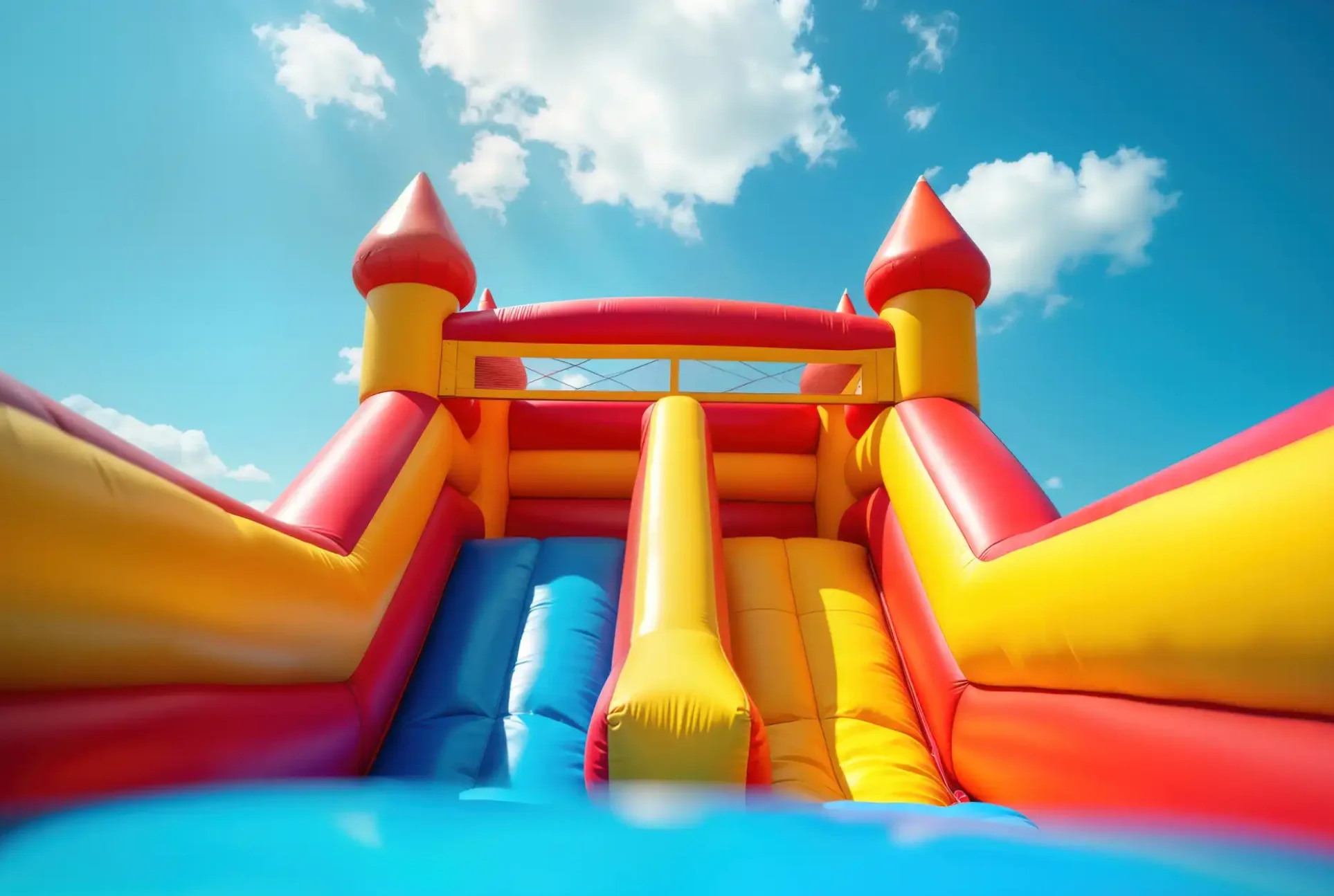
These are generally the most basic and portable of all inflatable units and are the perfect choice for any child between the ages of 3 and 10 years. Parents are always looking for birthday parties so this is an easy and predictable product to market and rent out. The best part is, there will always be a rental available every weekend and every holiday.
Water slide combos
These are the key products for summertime rentals. You will get anywhere between $350 and $500 a day for a water slide rental. They will pretty much rent themselves from May to September. Just one water slide alone can make more money in three summer months then any single bounce house will in an entire year.
Obstacle courses
If you are aiming for something more than basic bounce houses then an obstacle course rental can cost $500 to $800 dollars per rental. If a parent or school book this rental it is worth four normal bounce house rentals as it is takes the same amount of time to set it up but doubles it profits. These are perfect for school carnivals, picnics and any sort of team event.
Interactive games
These type of games such as human football, basketball combo inflatable game, bungee runs or anything along the line of carnival-type games are ideal because they don’t take up a huge amount of storage space and will bring in a good amount of revenue. They cater to a different audience as well: older kids, teenagers and even adults who don’t have an interest in bounce houses.
Toddler units
The rental of toddler units or age-appropriate inflatables for children 3 years old and younger is a growing opportunity. While these type of rentals don’t fetch the same amount of cash as some of the more elaborate games, they are very hard to find. A parent is willing to pay $100 to $150 to rent one for the weekend for their child because they will not be able to find them elsewhere.
How much money can you actually make?
Here’s the honest math on what different units cost versus what they earn.
Standard bounce house
($1,800 to buy): At $175–$225/day, you’ll pay it off in about 9–12 rentals. If you get one booking every weekend from April through October, you’ve broken even before summer is over, and every rental after that is profit.
Water slide combo
($3,500 to buy): At $350–$500/day, and with strong summer demand, you can realistically recover your investment in a single season. This is probably the best bang-for-your-buck unit out there for inflatable rental income.
Obstacle course
($5,000–$8,000 to buy):
Takes longer to pay off, but the paydays are bigger, and you’ll often end up renting to schools, churches, and companies that come back year after year. Once you’re on their vendor list, you’re set.
Interactive games
($800–$3,000 to buy): These vary a lot, but a basketball combo that costs $1,200 and fits in the corner of your garage can rent for $200/day. Six bookings and it’s paid for. Hard to beat that.
How to start small and scale later
If you’re just getting started, the sweet spot is a 13x13 combo bounce house with a slide, which usually costs around $2,200–$2,800 for a commercial-grade unit.
Why a combo instead of a plain bounce house?
Because it books more. Parents see the slide and they’re sold. It feels like more value for their money, so you get fewer people trying to haggle on price and more people just hitting the “book now” button.
A few things you really shouldn’t skip:
-
Buy commercial-grade, not residential. The inflatables you see at Costco or Target aren’t made for this. They wear out fast, and more importantly, your insurance probably won’t cover them, and venues like schools and parks will actually ask to see proof that your equipment meets commercial safety standards before they let you set up.
-
Good brands to look into include Magic Jump, Blast Zone, Gorilla Bouncer, and Ninja Jump. You can buy direct from manufacturers, at inflatable trade shows, or through commercial listings on eBay or Wholesale Playground. Make sure whatever you buy comes with a commercial blower and meets ASTM safety standards.
-
Grab a backup blower. It’s $100–$150 and could save you from a really bad day at someone’s birthday party.
Storage, deliveries, and other logistics
A common misconception when learning how to start a bounce house rental business is that most of the work happens during the event. In reality, logistics can take up the majority of your time.
The good news is, these things are way more manageable than they look.
Storage
When deflated and rolled up, most inflatables fit in a bag about the size of a large duffel. A standard 13x13 bounce house fits in a 10x10 space, basically one parking spot in your garage. Even bigger water slides can be tucked into a two-car garage without too much trouble once you get organized.
Deliveries
For getting it to events, a 5x10 trailer that hooks to an SUV or truck is enough to start. You can haul two or three units at once, which is all you need early on. As you grow and add more inflatables, a bigger enclosed trailer is worth the upgrade, it protects your equipment and looks a lot more professional pulling up to events.
Setting up
Setting up solo, with a little practice, takes 15–30 minutes for a standard bounce house, including staking it down, hooking up the blower, doing a quick safety check. Bigger units like water slides or obstacle courses take longer (45–90 minutes), so factor that into what you charge.
Once you’ve got steady bookings, bringing in a helper makes a huge difference. Most people in this business pay $25–$50 per job for someone to come out and assist with setup and takedown. Pay per job rather than hourly when you’re starting out, it keeps your costs tied directly to what you’re earning.
The legal side of things
Legal requirements are an essential part of how to start a bounce house business. Most operators register as an LLC and purchase general liability insurance to protect against risks.
Many venues, especially schools and public parks, require proof of insurance before allowing setup. For example, a company renting to a school district may need to provide an “additional insured” certificate before the event is approved.
Some regions also require annual inspections and safety certifications. Staying compliant not only protects your business but also builds trust with clients.
More importantly, residential inflatables are often not permitted for commercial use. Many insurance providers will not cover claims involving non-commercial equipment, and some venues like schools or public parks require proof that your inflatables meet commercial safety standards. Starting with commercial-grade PVC units helps you stay compliant and protects your business from unnecessary risk.
This content is for informational purposes only and does not constitute legal advice. You should consult with a qualified legal professional to ensure your business complies with all local laws and regulations.
How to scale your rental business
The fastest path from “small side hustle” to $10k+ a month comes down to two things: putting your early profits back into the business and making smart choices about what to buy next.
Reinvest your first earnings into a new product
If you’re getting two to four bookings a week, you can afford a second inflatable before summer ends. Now you’ve doubled what you can earn on a busy weekend, without adding much in the way of new costs.
Don’t buy two of the same thing
If your first unit is a bounce house combo, your second should be a water slide or an obstacle course — something that serves a different kind of event. That way you can say yes to more bookings and start taking jobs where someone wants multiple inflatables.
Market to schools, churches, and communities
A school carnival might need four to six inflatables at once, which could mean $2,000–$4,000 in one day. These groups are less focused on finding the cheapest option and more focused on finding someone reliable, which means once you’ve done a good job for them, they’ll call you back every year.
Upsell extras with each booking
Tables, chairs, generators, popcorn machines, snow cone machines, tent canopies, these all pair naturally with inflatables and add real money to each order. A lot of people in this business find that extras bump their average booking up by 30–50%.
How to get your first customers
Having great equipment doesn’t automatically mean the bookings roll in. Here’s what actually works:
Google Local Services Ads
Google local service ads are one of the most effective ways to get found. When a parent types “bounce house rental near me” into Google, these ads show up right at the top, even above regular search results. It typically costs $200–$500/month to run them, but the leads are high quality because the person is already ready to book.
Short videos on Instagram and TikTok
Social media works surprisingly well for local businesses. Post a quick clip of a water slide going up in someone’s backyard, tag your city, and you’ll reach parents in your area who didn’t even know they needed one. Aim for two or three posts a week during your busy season.
Thumbtack and GigSalad
These are worth setting up a profile on. Event planners actively search these platforms for entertainment vendors, and getting a few early reviews can bring in a steady trickle of bookings without any extra work on your end.
Your local Facebook community groups
Facebook groups are gold for connecting to your local community. These include PTA groups, school community pages, and neighborhood pages to name a few. You can post there when you launch, offer a small discount for first-time customers, and let the recommendations do the rest. People trust their neighbors alot more than they trust ads.
Connect with local event venues.
Community centers, parks with pavilions, and hotels that host parties are constantly asked by clients if they know anyone who does inflatables. If you can get on their referral list, you get warm leads for free.
Managing through a rental software
When you have one inflatable and a handful of bookings, a calendar and a notepad work fine. But once you’ve got four or five units and weekends are filling up, things get complicated fast, and the worst thing that can happen is accidentally double-booking the same bounce house for two different birthday parties on the same Saturday.
That’s exactly where Booqable comes in. It’s booking and inventory software built for rental businesses just like this one. You can see at a glance what’s out, when it’s coming back, and what’s free for the next booking. It handles deposits, tracks any damage to your equipment, and sends automatic confirmation and reminder emails to your customers, all without you having to do it manually.
Booqable also comes with a built-in rental website builder, where you can pick a ready-made template, swap in your own photos and prices, connect your custom domain, and you’ve got a real online store where customers can check availability, book, and pay upfront (deposit included) without ever having to call you.
If you’re taking bookings on the day of an event or collecting payment in person at a setup, the Booqable mobile point of sale has a built-in order page so you can take reservations and payments right from your smartphone, with no separate card reader or invoicing app needed.
Shavonte, who runs JumpMania Event Rentals in Chesterfield, Missouri, knows this firsthand. She started JumpMania to give families access to high-quality, reliable rentals including bounce houses, obstacle courses, photo booths, the works.
But as bookings picked up, managing everything through calls, emails, and notes started causing real problems: scheduling mix-ups, double bookings, and a lot of time spent just trying to keep track of what was where. After switching to Booqable, all her bookings live in one place, availability updates automatically, and customers can book online whenever they want. Less stress, more bookings, and a much more polished experience for her customers.
Building a business that lasts
The inflatable rental business in 2026 is genuinely one of the better opportunities out there for someone who wants to build something on their own terms, flexible hours, low startup costs, and real earning potential. The people making serious money at it aren’t necessarily the ones who started with the most equipment.
They’re the ones who took it seriously from the beginning, bought the right gear, and put systems in place early.